Your studio,
on the record
Portfolio, clients, deals and money in one quiet place, for artists of any kind. And underneath it all, the proof that a work is yours, collected from the day the file arrives.
Making the work is one part of the day. The rest is remembering who has it, on what terms, and whether they paid.
Which brand holds what. When a licence ends. Which royalty period is due, and which file a client actually received. None of it is hard on its own. All of it is easy to lose.
Legality keeps all of it, and seals every upload as it arrives. So the day something goes wrong, you are not assembling proof. It is already there.
One work is enough to start.
One studio instead of four things that do not know about each other.
The work sits on a portfolio site. The clients sit in a spreadsheet. The terms sit somewhere in an email thread. The sketches sit in a folder that, on its own, proves nothing. Each one is fine. Together they are four places to keep up to date and nowhere to point at when it matters.
Six screens, from a real account.
Anna Atkins made the first book ever illustrated with photographs, in October 1843. Her cyanotypes are in the public domain, so we keep a demonstration studio in her name. The dates are hers.
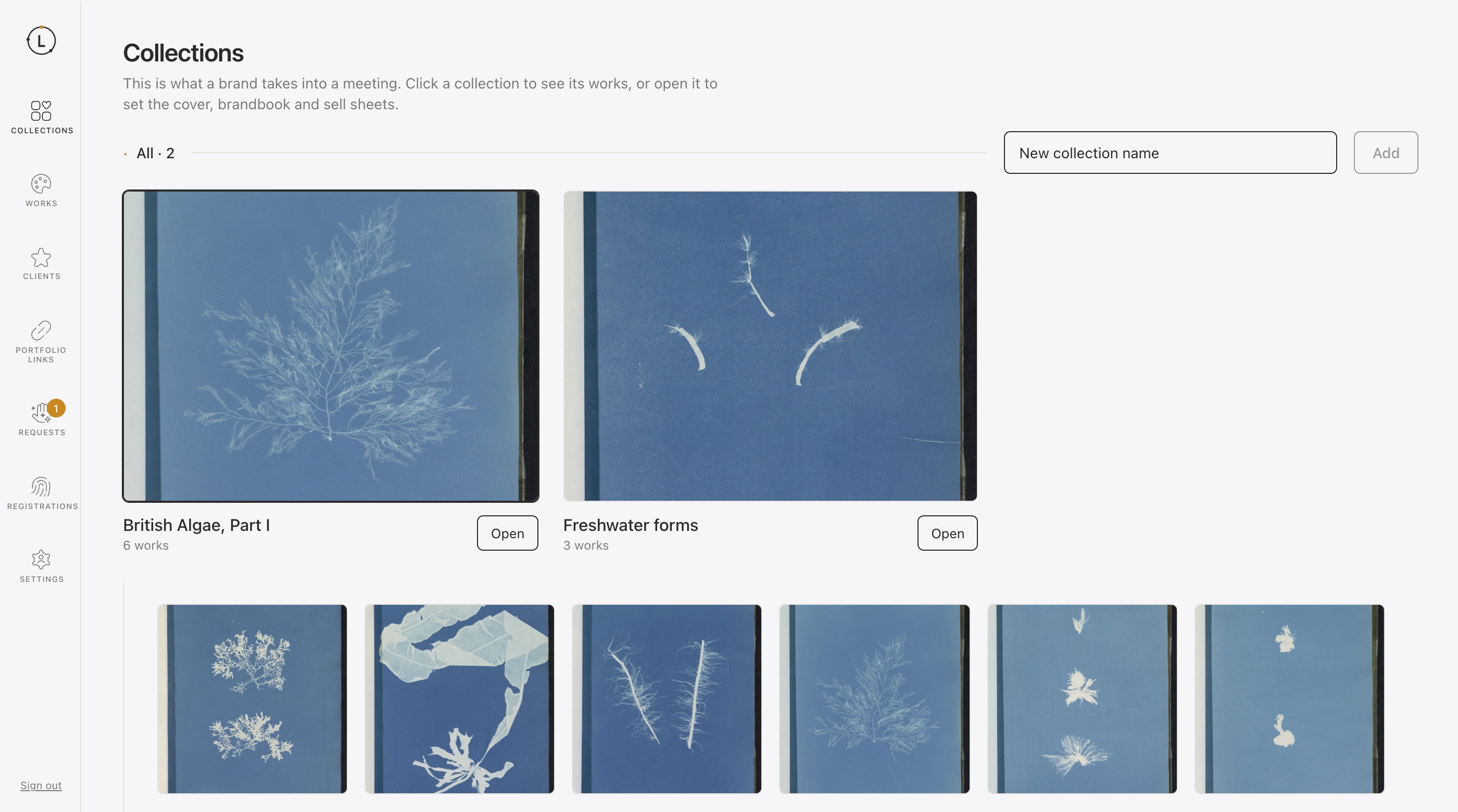
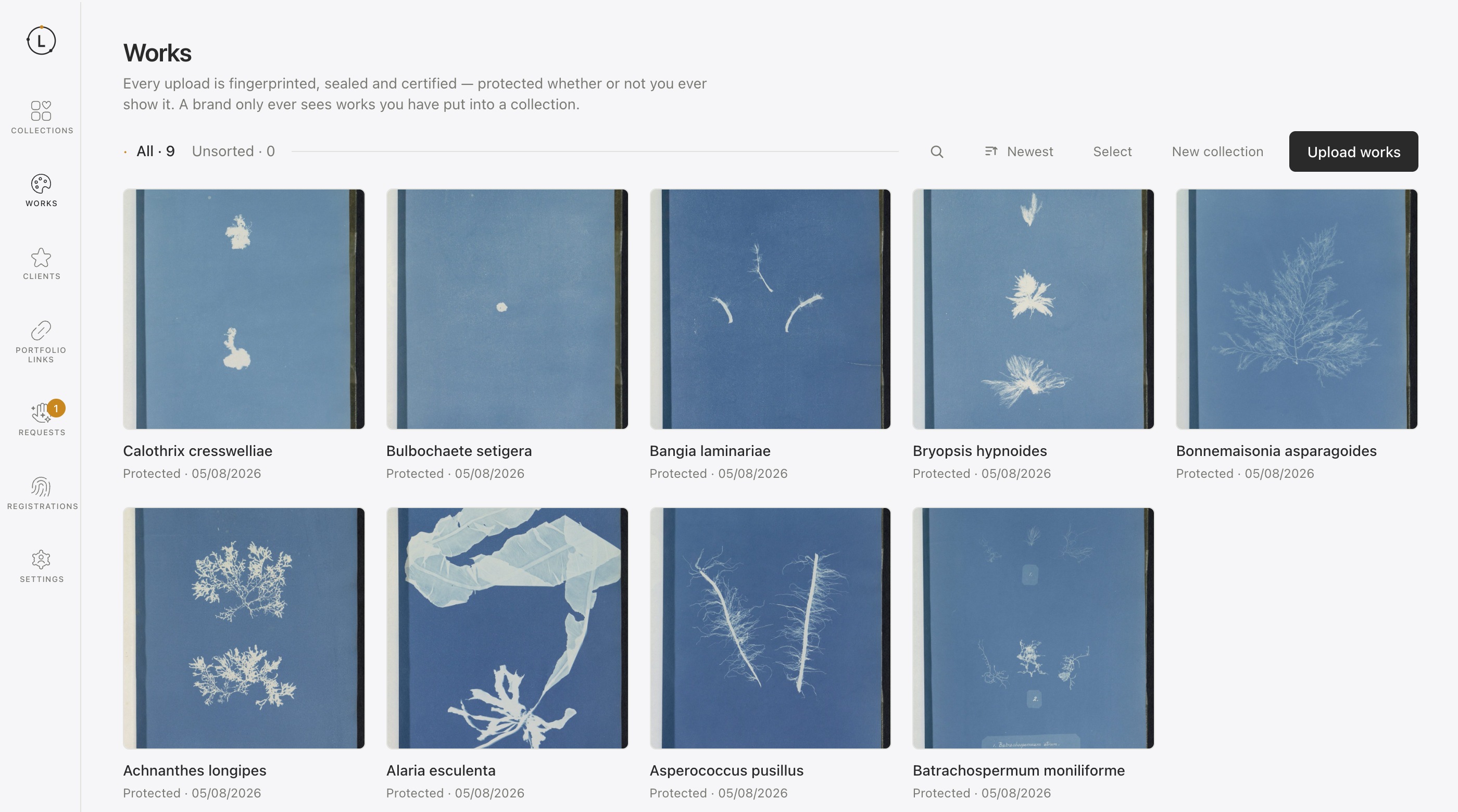
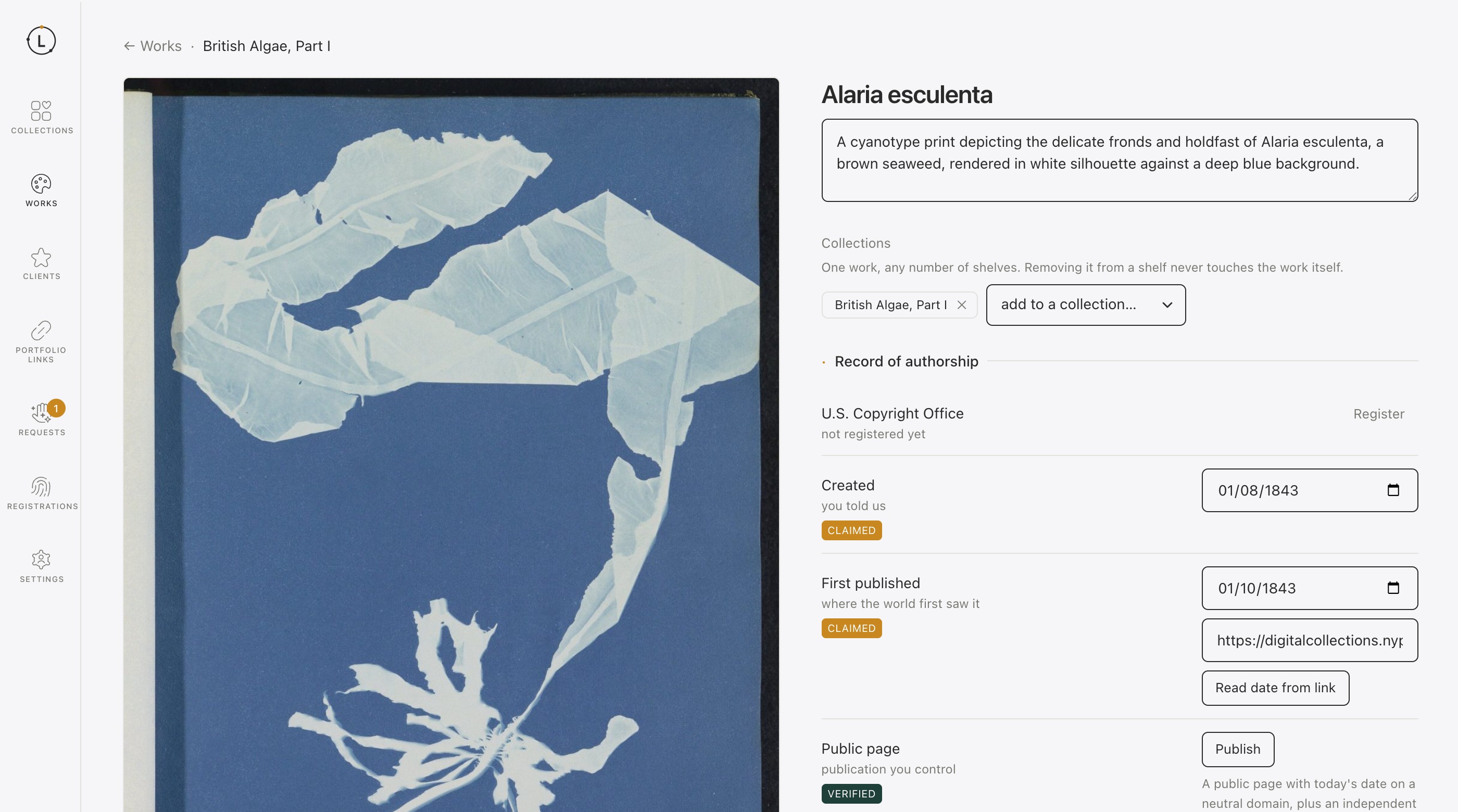
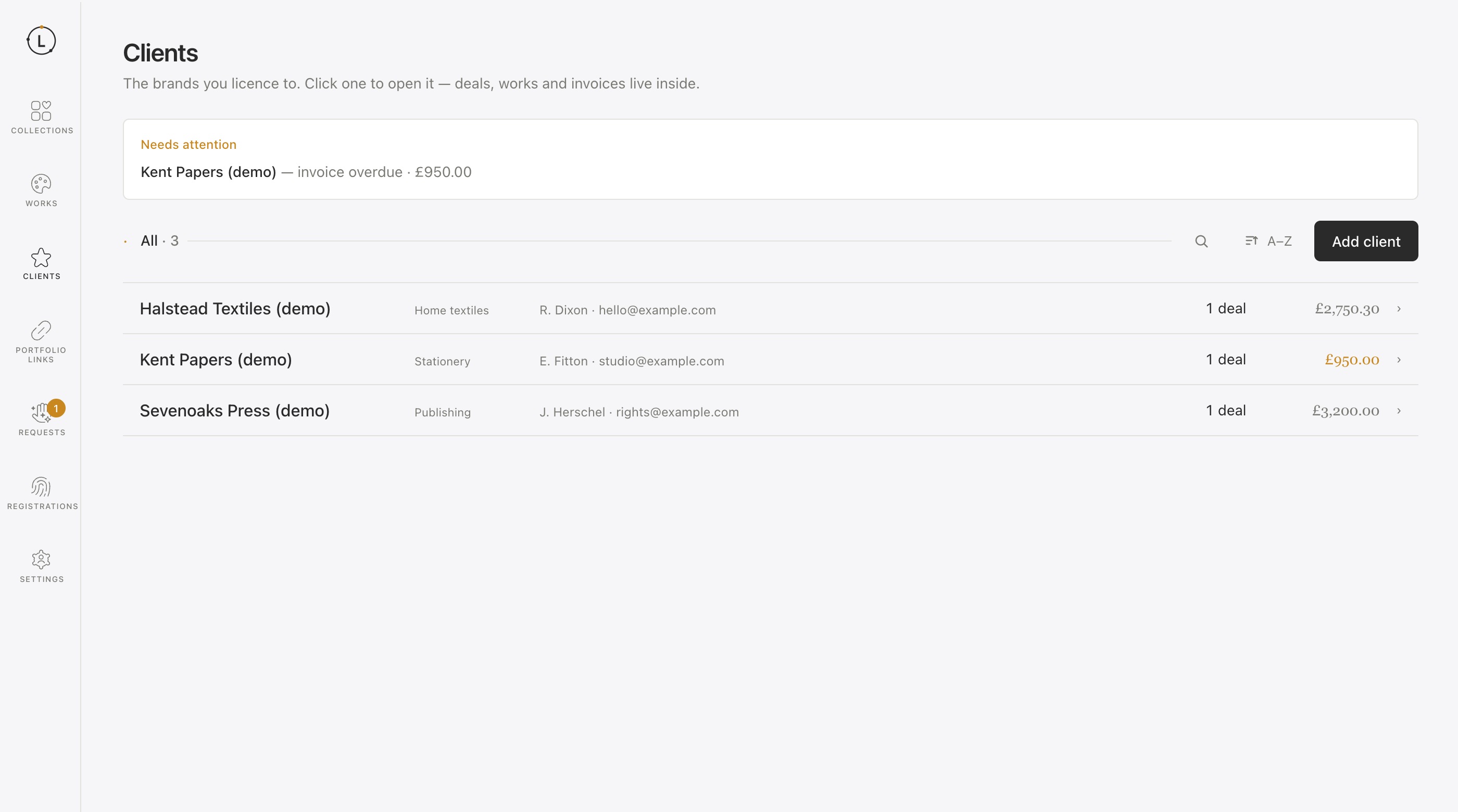
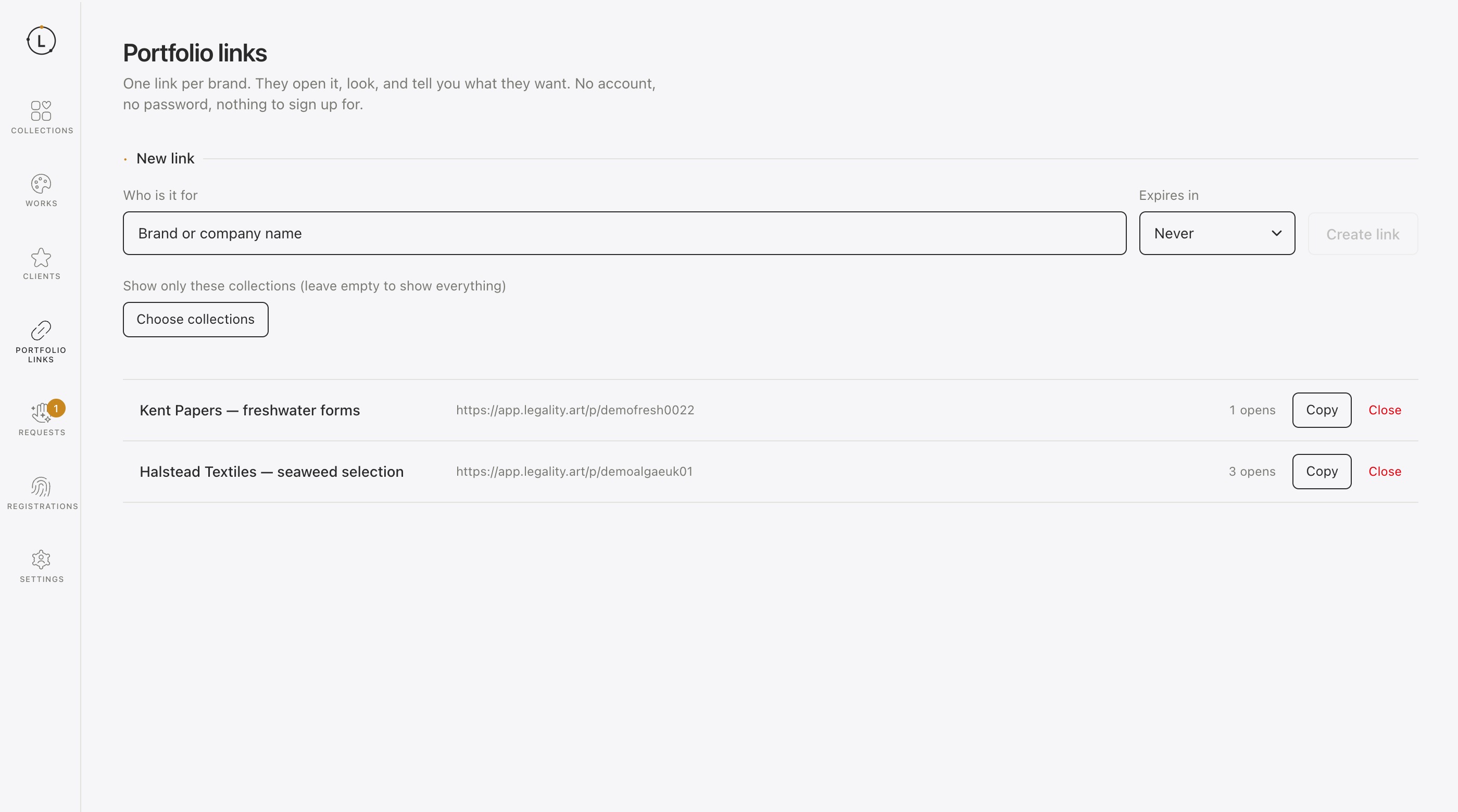
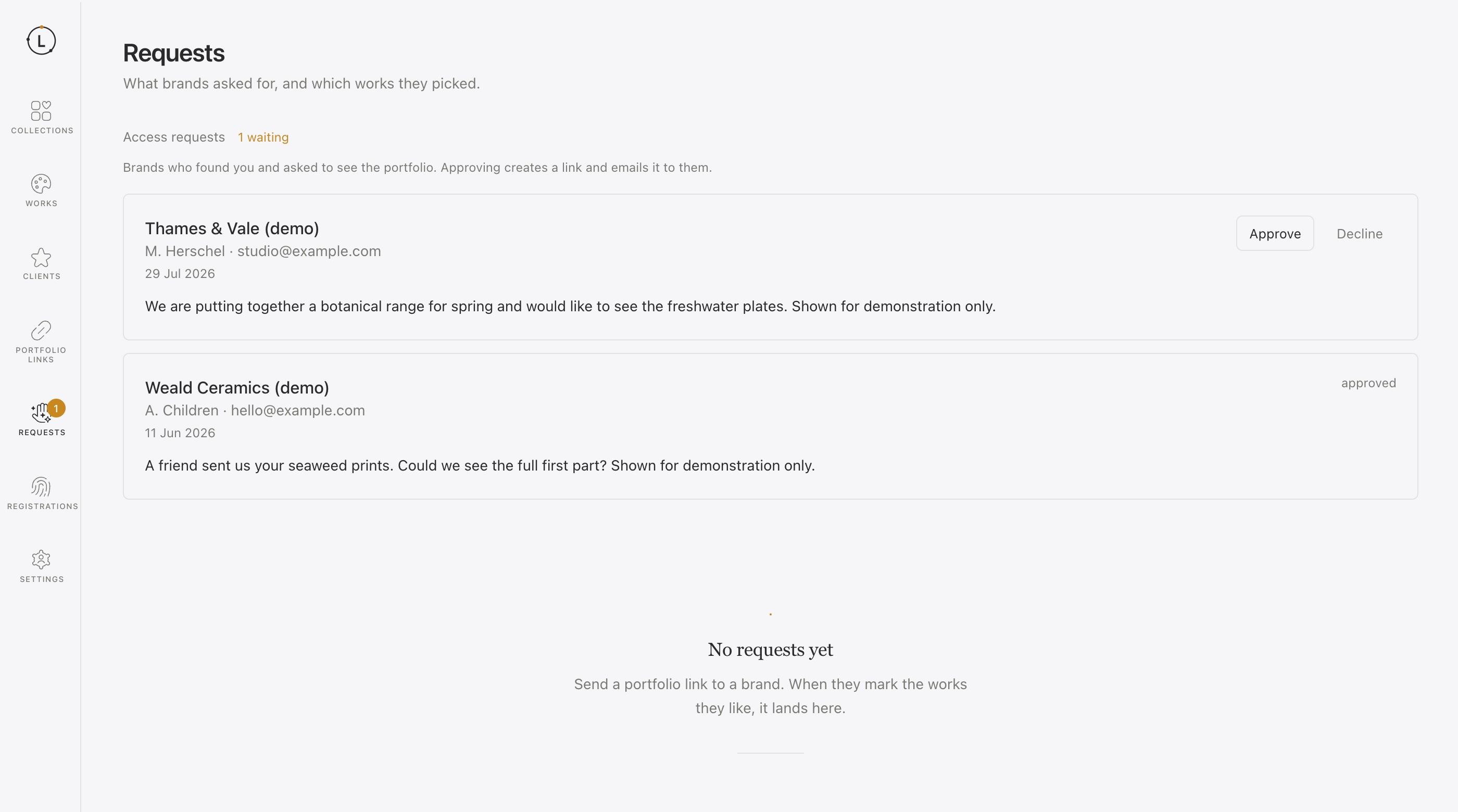
Demonstration account. Works by Anna Atkins (1799–1871), in the public domain. Clients, deals and payments are shown for demonstration only.
What a seal proves, who sees what, and what it costs.
What does the time stamp prove?+
That this exact file existed no later than that day. Authorship itself is shown by the whole chain: your sketches, the dates you recorded, publications and registrations. The longer answer →
Who can see my portfolio?+
Nobody, until you create a link. Links are made per audience, can be revoked, and every view and download is recorded for you.
What does it cost?+
Nothing, for now. When we do start charging it will be around €9 a month, and there will always be a free level that keeps your works, their dates and their proof, so nothing you have recorded is ever held hostage. Any change comes by email months in advance, with time to export everything and leave.
What happens on the first day?+
You upload what you already have. Every file is sealed as it lands, so an archive of ten years is on the record within an afternoon. Dates you know from before, such as when you drew it and where it first appeared, you enter by hand, and they are kept as your word, marked as such.
Record of authorship.
22 September 1843 First published.
- ✓The day you made it, in your own words.
- ✓The day the world first saw it, with the link.
- ✓A time stamp taken the moment the file arrived.
- ✓A fingerprint of the exact file, so a copy can be matched to it.
Yours to check, without us.
The stamp comes from an outside service, so it holds even if we are not here to confirm it.
The life of one work, as the record keeps it.
The art itself stays behind the door here too. What we can show is the record: four things, and a certificate you are free to open and read.
Ask the ledger, in plain words.
Claude, ChatGPT, or another assistant. Ask it about your works, your clients and your money, or have it write down a payment that just landed. It reads and adds; it can never delete, never touches seals or certificates, and never sees another author's work.
How to connect it →How much came in this year, and from whom?
Eleven brands, 38 payments.
- Licences$12,400.00
- Royalties$4,534.34
- In euro€6,800.00
Two brands owe you this month.
Write down the payment that just landed.
Recorded. The royalty clock for that deal moved to March.
An example exchange. Numbers are illustrative.
Work you licence from an artist here comes with its provenance attached: who made it, when, and what you were shown.
You received a portfolio link
It opens a private portfolio the artist chose to share with you. No account, no password. Opens and downloads are recorded for the artist, so both sides remember what was sent and when. A download is not a licence: those are agreed with the artist, in writing.
The longer answer →You are reading a certificate
A certificate shows what the author recorded: the fingerprint of the file, its dates, and a stamp showing the file existed no later than that day. The stamp can be checked independently.
The longer answer →You are looking for an artist
Portfolios here are private and open by invitation. Tell us what you are looking for at main@legality.art and we will pass it on to artists it suits.
your art, on the record
Open by invitation, and free while we are small. A short form: what you make, and where your work already lives.